

The UPSSSC PET, or Preliminary Eligibility Test, is the gateway to most Group B and Group C government jobs in Uttar Pradesh. Since 2021, the Uttar Pradesh Subordinate Services Selection Commission has made it compulsory to qualify in PET before applying for major recruitments like Lekhpal, Junior Assistant, Forest Guard, X-Ray Technician, Village Development Officer and many others. If you want a UP government job, PET is the first exam you must clear. This guide explains the complete syllabus, exam pattern, eligibility and preparation strategy in simple language.

PET is a qualifying screening test. Your PET score does not decide your final selection directly, but it decides whether you are eligible to apply for the main examinations. Only candidates who score above the PET cut-off can fill the forms of the main recruitments, and the mains exam shortlists candidates based on their PET score. This is why a high PET score matters — it opens the door to more vacancies and better posts.
Who Can Apply: Eligibility Criteria
Candidates who have passed High School (class 10) or Intermediate (class 12) or graduation can apply for PET, depending on the level of the posts they want to target later. The minimum age is 18 years and the maximum age is generally 40 years, with relaxation for SC, ST, OBC and other reserved categories as per Uttar Pradesh government rules. Candidates must be residents of Uttar Pradesh or meet the domicile conditions given in the notification. There is no limit on the number of attempts for PET, so candidates can appear every year to improve their score. Always read the latest PET notification on upsssc.gov.in for the exact eligibility and fee details.
UPSSSC PET Exam Pattern
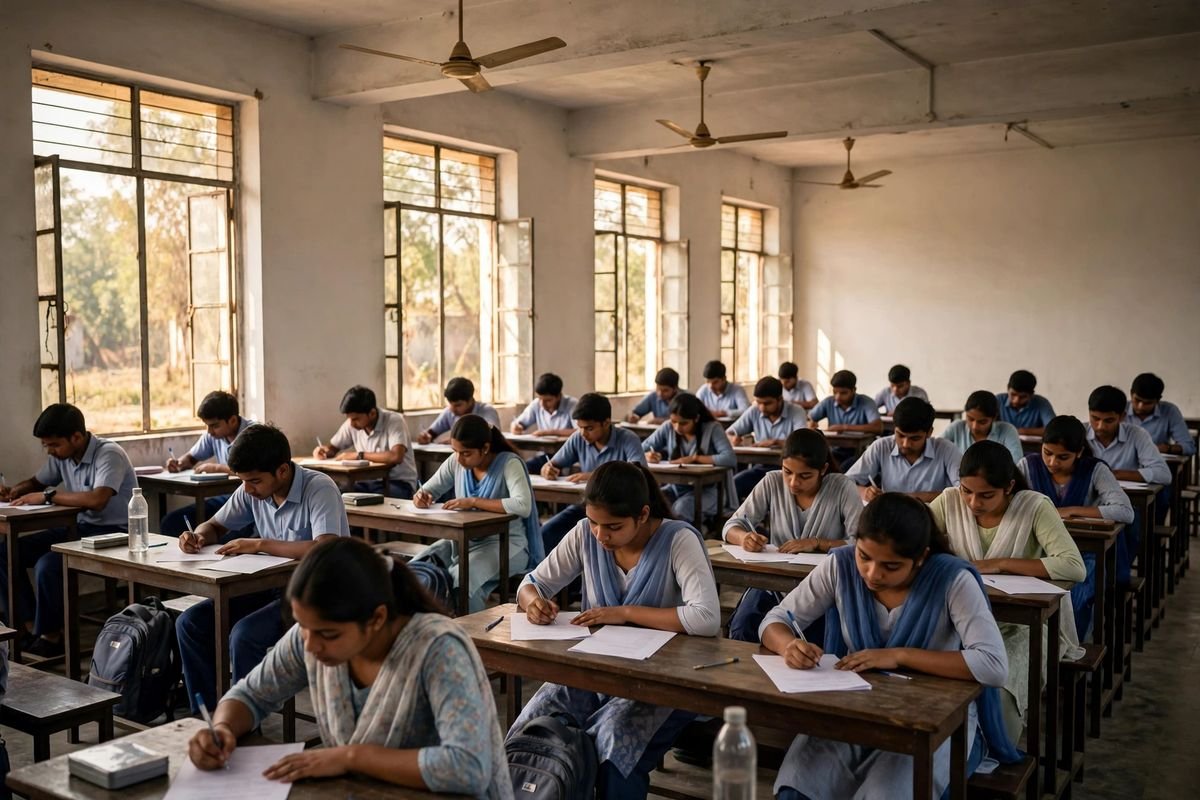
The PET is an offline objective examination of 100 marks. It contains 100 questions, each carrying 1 mark, and the total time allowed is 2 hours. There is negative marking of 0.25 marks for every wrong answer. The paper has 15 sections covering a wide range of subjects: Indian history, Indian national movement, geography, Indian economy, Indian Constitution and public administration, general science, elementary arithmetic, general Hindi, general English, logic and reasoning, current affairs, general awareness, analysis of two unseen passages, graph interpretation, and table interpretation and analysis. The wide syllabus means that PET tests general awareness more than deep subject knowledge, so smart and broad preparation works best.
Subject-Wise Syllabus Explained
Indian history covers ancient, medieval and modern India, including the freedom struggle, important movements and leaders. Geography covers physical geography of India and the world, rivers, climate, soils and natural resources, with special focus on Uttar Pradesh. Indian economy covers basic concepts, five-year plans, agriculture, industry, banking and government schemes. The Constitution section covers the Preamble, fundamental rights and duties, Parliament, state legislatures, Panchayati Raj and important amendments. General science covers physics, chemistry and biology of class 10 level. Elementary arithmetic includes number system, percentage, average, ratio, profit and loss, time and work, and simple and compound interest. General Hindi covers grammar, synonyms, antonyms, idioms and comprehension, while general English covers grammar, vocabulary and comprehension. Reasoning includes series, coding-decoding, blood relations, direction sense and puzzles. Current affairs of the last six to eight months, especially Uttar Pradesh government schemes, carry heavy weight.
Step-by-Step Preparation Plan
Step one, download the official syllabus and previous year PET papers and understand the weight of each section. Step two, finish the NCERT-based notes for history, geography, polity and science in the first two months. Step three, start daily current affairs from a newspaper and a monthly magazine, and maintain a separate notebook for Uttar Pradesh schemes and facts. Step four, practise 20 maths and 20 reasoning questions daily, because these sections are the most scoring. Step five, take one mock test every week from the third month onwards and analyse all mistakes. Step six, in the last month, revise all short notes, solve previous year papers, and take a mock test every alternate day. Three to four months of regular study is enough for most candidates to score well in PET.
How PET Score Is Used for Main Exams
After the PET result, the commission releases category-wise cut-off marks. Candidates who score above the cut-off become eligible to apply for the main examinations of various posts. For each mains exam, the commission shortlists candidates based on their PET score — usually 15 to 20 times the number of vacancies for the mains exam. This means a higher PET score gives you more chances, because you can apply for more posts and get shortlisted more easily. The PET score is valid for one year, so one good PET result can be used for several recruitments announced during that period. Candidates can also check our coverage of the UPSSSC Auditor eligibility result to see how PET-qualified candidates are shortlisted for the mains stage.
Subject-Wise Preparation Strategy
For history and polity, read NCERT books and Lucent’s General Knowledge, and revise with short notes every week. For geography and economy, focus on India and Uttar Pradesh-specific facts, because the commission asks many state-level questions. For science, class 10 NCERT is enough. For maths and reasoning, daily practice matters more than theory — solve questions under a timer to build speed. For Hindi and English, practise grammar and comprehension passages regularly. For current affairs, read the newspaper daily and revise a monthly compilation in the last month. The two unseen passages and graph/table questions are easy marks, so never skip them in practice. The best strategy is to attempt all 100 questions only if you are confident, because negative marking of 0.25 per wrong answer can reduce your score.
Mistakes to Avoid
The biggest mistake is treating PET as a small exam and preparing only in the last month; its syllabus is very wide and needs at least three months. Another error is ignoring Uttar Pradesh-specific GK and schemes, which carry a large share of questions. Many candidates study only static GK and ignore current affairs of the last six months. Some students never take mock tests and cannot finish 100 questions in two hours. Others attempt all questions blindly despite negative marking. Finally, many candidates forget to apply for the mains exams after qualifying in PET, because each mains exam has a separate form and fee — always keep checking upsssc.gov.in after the PET result.
Frequently Asked Questions
What is UPSSSC PET? PET is the Preliminary Eligibility Test conducted by UPSSSC. It is a screening test that candidates must qualify in before applying for Group B and Group C posts in Uttar Pradesh.
What is the qualification for UPSSSC PET? Candidates who have passed class 10, class 12 or graduation can apply, depending on the posts they want to target. The age limit is generally 18 to 40 years with relaxation.
How many questions are there in PET? PET has 100 questions for 100 marks, to be solved in 2 hours. There is negative marking of 0.25 marks for each wrong answer.
Is the PET score valid for one year? Yes, the PET score is generally valid for one year, and it can be used to apply for various main examinations announced during that period.
How many months are needed to prepare for PET? Three to four months of daily study for five to six hours is enough for most candidates, provided they cover the full syllabus and take mock tests.
Can I apply for Lekhpal without PET? No, PET qualification is compulsory to apply for Lekhpal and most other Group B and Group C posts advertised by UPSSSC.
Quick Checklist Before You Start
- Download the official PET syllabus and previous year papers.
- Check your age, qualification and domicile eligibility.
- Finish NCERT-based notes for history, polity and science.
- Make a separate notebook for UP schemes and current affairs.
- Practise 20 maths and 20 reasoning questions daily.
- Take one mock test every week and revise all mistakes.
UPSSSC PET is the first and most important step for any UP government job aspirant. It is a wide but easy paper, and a good score opens the doors to dozens of recruitments for a whole year. Start your preparation today, stay consistent, and keep following our UPSSSC Lower PCS recruitment and UPSSSC Moharir admit card updates for the latest notifications.

