

Railway Group D, officially known as RRB Level 1 posts, is one of the largest recruitment drives in India. The Railway Recruitment Boards regularly announce tens of thousands of vacancies for posts like Track Maintainer, Assistant, Assistant Pointsman and other Level 1 jobs in the Indian Railways. The qualification needed is only class 10 pass or ITI, which is why crores of candidates apply. This guide explains the complete exam pattern, syllabus, physical test and a realistic preparation plan for beginners.
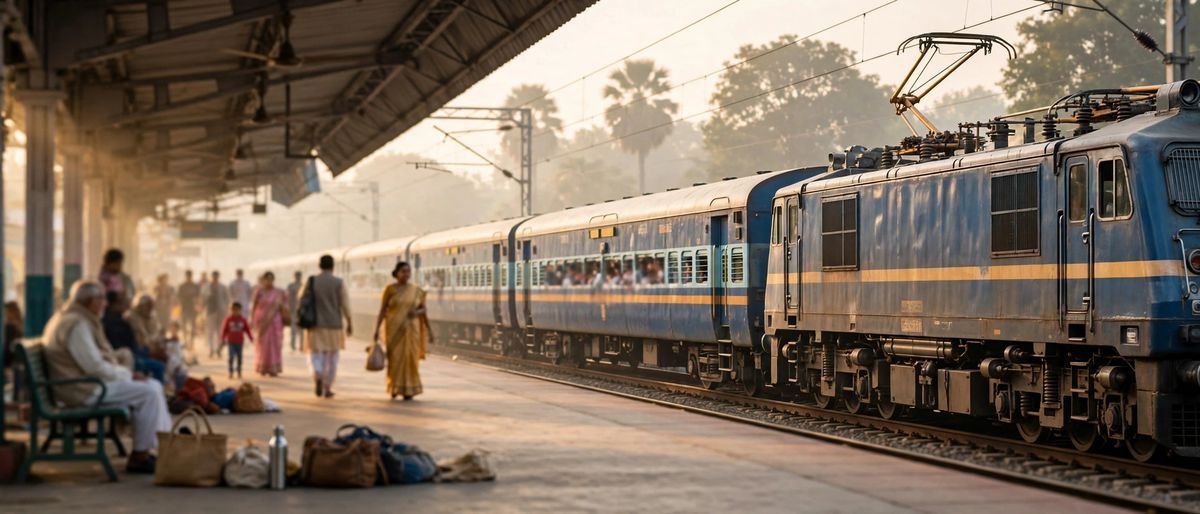
The biggest advantage of Railway Group D is that the written exam is based on class 10 level subjects and there is no interview. Selection is made through a computer-based test, a physical efficiency test, document verification and a medical examination. If you prepare systematically for four to five months, you can clear the CBT with a good score and then focus fully on the physical test.
Who Can Apply: Eligibility Criteria
Candidates must have passed class 10 from a recognised board, or hold an ITI certificate from NCVT or SCVT, or possess a National Apprenticeship Certificate. The age limit is generally 18 to 33 years, with relaxation of 3 years for OBC, 5 years for SC and ST, and additional relaxation for ex-servicemen and railway employees as per rules. Candidates must be Indian citizens, and they should apply for the railway zone of their choice carefully, because the cut-off varies from zone to zone. Always read the Centralised Employment Notice (CEN) completely before applying, since vacancy numbers, medical standards and zone-wise posts change every cycle.
Railway Group D Exam Pattern (CBT)
The Computer Based Test has 100 questions to be solved in 90 minutes. The total marks are 100, with each question carrying 1 mark, and there is negative marking of one-third mark (0.33) for every wrong answer. The paper has four sections: Mathematics with 25 questions, General Intelligence and Reasoning with 30 questions, General Science with 25 questions, and General Awareness and Current Affairs with 20 questions. The minimum qualifying marks are 40 percent for General category, 30 percent for OBC and SC, and 25 percent for ST candidates, though the actual cut-off for selection is much higher because of heavy competition. Candidates who qualify in the CBT are called for the Physical Efficiency Test in a ratio decided by the railway board.
Subject-Wise Syllabus Explained
Mathematics covers number system, BODMAS, decimals, fractions, LCM and HCF, ratio and proportion, percentage, mensuration, time and work, time and distance, simple and compound interest, profit and loss, algebra, geometry, trigonometry, elementary statistics, square root, age calculations, calendar and clock, and pipes and cistern. General Intelligence and Reasoning includes analogies, alphabetical and number series, coding and decoding, mathematical operations, relationships, syllogism, jumbling, Venn diagram, data interpretation and conclusions, decision making, similarities and differences, and analytical reasoning. General Science covers physics, chemistry and life sciences of class 10 level, including topics from NCERT books. General Awareness covers current affairs, science and technology, sports, culture, personalities, economics, polity and other subjects of importance.
5-Month Step-by-Step Study Plan
In month one, complete the basics of mathematics and general science from NCERT class 9 and 10 books, and start daily current affairs. In month two, finish the reasoning syllabus with daily practice sets of 30 questions, and revise all maths formulas in a separate notebook. In month three, start subject-wise mock tests and solve previous year question papers of RRB NTPC and Group D, because many question patterns repeat. In month four, take full-length mock tests twice a week within the 90-minute limit and analyse every mistake carefully. In month five, revise all short notes, take a mock test every alternate day, focus on weak chapters, and begin physical training seriously. Keep Sundays for revision and one full mock test throughout the preparation.

Subject-Wise Preparation Strategy
For mathematics, speed matters most: learn short tricks, memorise tables, squares and cubes, and practise 40 questions daily under a timer. For reasoning, 30 questions carry the highest weight, so daily practice of series, coding and analogy questions can fetch easy marks. For general science, read NCERT science books of classes 9 and 10 thoroughly, because most questions come directly from them, especially physics numericals and chemistry basics. For general awareness, read a monthly current affairs magazine and make notes of railway-related news, awards, sports events and government schemes. The best habit is to solve one previous year paper every week, since it builds exam temperament and shows which topics are asked repeatedly.
Physical Test: PET Details
The Physical Efficiency Test is qualifying in nature but many candidates fail here. Male candidates must lift and carry 35 kg of weight for a distance of 100 metres in 2 minutes in one chance, and run 1000 metres in 4 minutes 15 seconds in one chance. Female candidates must lift and carry 20 kg of weight for 100 metres in 2 minutes, and run 1000 metres in 5 minutes 40 seconds. The weight-lifting test surprises many candidates who only practise running, so include weight-carrying practice in your training at least twice a week. Start physical training at least two months before the expected PET date, and practise on a ground similar to the test venue. You can check our report on the Railway RRB Group D result and merit list to understand how cut-off and selection work.
Mistakes to Avoid
The biggest mistake is ignoring general science, which carries 25 marks and is the easiest scoring section for candidates who read NCERT books. Another error is choosing the wrong railway zone — candidates should check previous cut-offs of each zone before applying. Many aspirants attempt all 100 questions despite negative marking; it is better to skip questions you are unsure about. Some students study only from YouTube videos without solving questions themselves, which does not build speed or accuracy. Others delay physical training until after the CBT result and then fail the weight-lifting test. Finally, never apply with wrong details in the form, because correction options are limited and mistakes can lead to rejection at document verification.
Frequently Asked Questions
What is the qualification for Railway Group D? Class 10 pass from a recognised board, or ITI from NCVT or SCVT, or a National Apprenticeship Certificate is required. The age limit is 18 to 33 years with relaxation for reserved categories.
How many questions are there in the RRB Group D CBT? The CBT has 100 questions for 100 marks, to be solved in 90 minutes. There is negative marking of 0.33 marks for each wrong answer.
Is there an interview in Railway Group D? No, there is no interview. Selection is through the computer-based test, physical efficiency test, document verification and medical examination.
What is the physical test for Railway Group D? Male candidates must carry 35 kg for 100 metres in 2 minutes and run 1000 metres in 4 minutes 15 seconds. Female candidates carry 20 kg and run 1000 metres in 5 minutes 40 seconds.
Which books are best for RRB Group D preparation? NCERT science books of classes 9 and 10, one standard maths book, one reasoning book, Lucent’s General Knowledge and previous year papers are enough for complete preparation.
What is the salary of Railway Group D posts? Level 1 posts carry a basic pay of Rs. 18,000 per month under the 7th Pay Commission, plus dearness allowance, house rent allowance and other railway benefits.
Quick Checklist Before You Start
- Read the Centralised Employment Notice and check your eligibility.
- Choose your railway zone after checking previous cut-offs.
- Finish NCERT science books of classes 9 and 10 first.
- Practise 40 maths and 30 reasoning questions daily.
- Take a full mock test every week within 90 minutes.
- Start weight-carrying and running practice two months early.
Railway Group D is a life-changing opportunity for 10th-pass youth because it offers a permanent central government job with job security, free railway passes and pension benefits. The exam is not difficult, but the competition is huge, so only disciplined preparation wins. Keep following our RRB NTPC recruitment updates and RRB NTPC exam city details for the latest railway job news.

